

Global Broker Regulation Inquiry App
About WikiFX
English
简体中文
繁體中文
English
Pусский
日本語
ภาษาไทย
Tiếng Việt
Bahasa Indonesia
Español
हिन्दी
Filippiiniläinen
Français
Deutsch
Português
Türkçe
한국어
العربية
اردو


Malaysia Cracks Down on Binance: Full Trading Ban Imminent Over Illegal Operations

WikiFX
|


Abstract:Malaysia is set to impose sweeping restrictions on global cryptocurrency exchange Binance, following renewed concerns over its regulatory status and operations within the country.
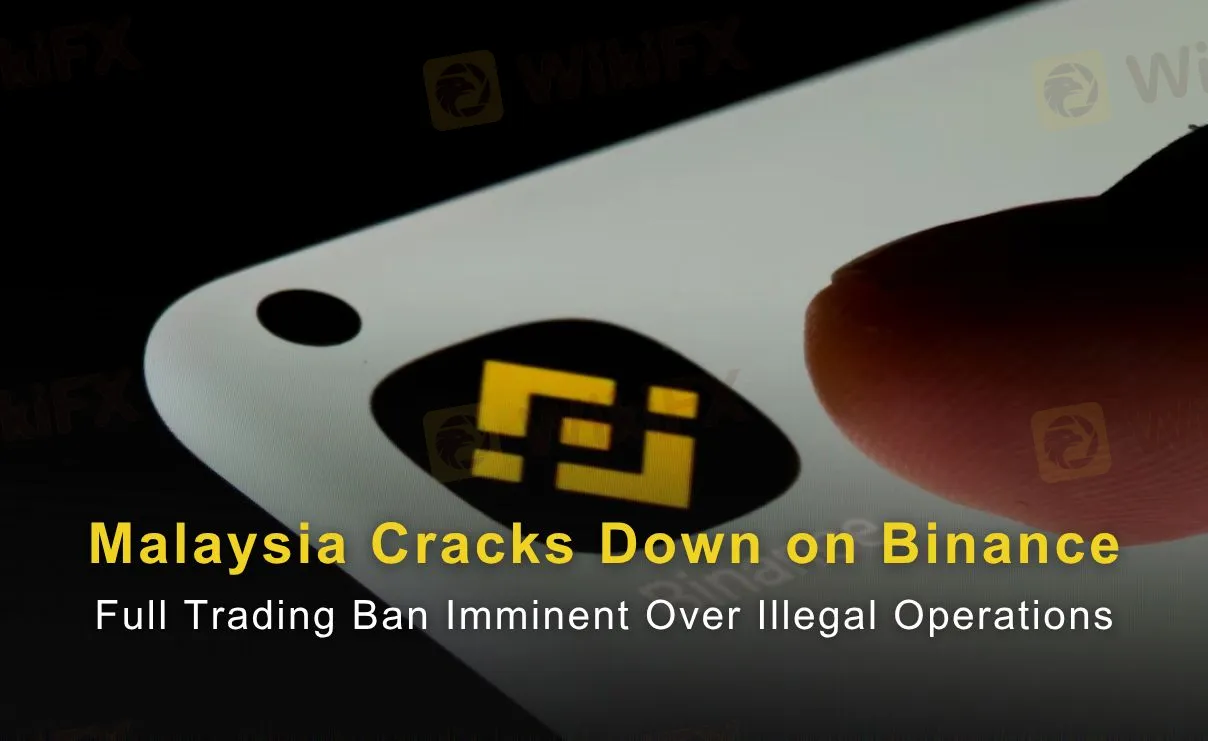
Malaysia is set to impose sweeping restrictions on global cryptocurrency exchange Binance, following renewed concerns over its regulatory status and operations within the country. The move, highlighted by Democratic Action Party (DAP) lawmaker Lim Guan Eng, underscores the governments ongoing scrutiny of unlicensed digital asset platforms and their potential risks to local investors.
According to Lim, Binance will face phased enforcement measures beginning on April 10, culminating in a full trading restriction by April 30. The development has also been confirmed through updates on Binances official website, signaling compliance with regulatory directives.
Regulatory Concerns and Legal Standing
Founded in 2017, Binance has grown at an extraordinary pace, dominating the global digital asset trading landscape within less than a decade. However, despite its scale and influence, the platform has never been formally registered in Malaysia, nor has it obtained the necessary licenses to operate as a Digital Asset Exchange (DAX) under local law.
Lim emphasized that Binances unlicensed status places it in violation of Malaysian financial regulations, raising significant concerns about investor protection and market integrity. He previously raised the issue during a parliamentary session on February 11, questioning whether the Securities Commission should reinstate Binance on its Investor Alert List due to the potential financial risks posed to Malaysian users.
In response, Finance Minister Anwar Ibrahim stated that, based on current assessments and compliance measures undertaken, authorities had not identified any outstanding regulatory issues warranting further action at that time. This included the decision not to re-list Binance on the Investor Alert List.
Securities Commission‘s Position
The Securities Commission Malaysia (SC) has maintained that its enforcement actions are guided by a comprehensive evaluation of multiple factors. These include the severity of regulatory breaches, the level of risk posed to domestic investors, and the broader implications for the integrity and stability of Malaysia’s capital markets.
While the SC has not indicated a shift in its earlier stance, Lims latest remarks suggest that regulatory pressure on Binance has intensified. He stressed that the Commission remains vigilant and prepared to take further action should new violations emerge or if additional risks to Malaysian investors are identified.
History of Enforcement Actions
Binances regulatory challenges in Malaysia are not new. The platform was first placed on the Investor Alert List on July 4, 2020, signaling caution to the public بشأن its unregulated status. This was followed by more decisive enforcement measures on July 26, 2021, when the SC invoked Section 354(3) of the Capital Markets and Services Act 2007.
Under this directive, Binance was ordered to cease operations in Malaysia, including shutting down its website and mobile applications accessible to local users. The SC also prohibited the exchange from disseminating advertisements to Malaysian investors via email or other communication channels.
In addition, access to Binance-managed communication platforms, such as Telegram groups, was restricted for Malaysian users. A public statement issued by the SC on July 30, 2021, further advised investors to immediately halt trading activities on Binance and to withdraw any funds held on the platform.
Concerns Over Peer-to-Peer Transactions
Another area of concern highlighted by Lim involves Binances peer-to-peer (P2P) trading function. Authorities had received information indicating that the platform facilitated Malaysian ringgit (MYR) transactions indirectly, using the Papua New Guinean kina as an intermediary currency.
Following discussions with regulators, Binance reportedly removed these MYR-related trading pairs, addressing one aspect of the compliance issue. However, the incident underscores the complexities of regulating decentralized and cross-border digital asset platforms, particularly those offering P2P services that can bypass traditional financial oversight mechanisms.
Broader Implications for Malaysia‘s Crypto Landscape
The latest restrictions on Binance reflect Malaysia’s cautious but firm approach toward digital asset regulation. While the country has embraced financial technology innovation, it has also prioritized investor protection and regulatory compliance.
For Malaysian crypto users, the implications are significant. The phased restrictions will likely limit access to one of the worlds most liquid trading platforms, potentially driving users toward locally registered exchanges or alternative international platforms that comply with Malaysian regulations.
For Binance, the move represents another chapter in its ongoing global regulatory challenges. The exchange has faced scrutiny in multiple jurisdictions, prompting efforts to enhance compliance frameworks and engage more proactively with regulators worldwide.
Looking Ahead
As the April 30 deadline approaches, market participants will be closely watching how the restrictions are implemented and whether further enforcement actions follow. The Securities Commission has reiterated its commitment to monitoring developments and safeguarding the interests of Malaysian investors.
Ultimately, the situation highlights a broader trend: as the cryptocurrency industry matures, regulatory expectations are becoming more stringent. Platforms operating across borders must navigate an increasingly complex legal landscape or risk being shut out of key markets like Malaysia.
Disclaimer:
The views in this article only represent the author's personal views, and do not constitute investment advice on this platform. This platform does not guarantee the accuracy, completeness and timeliness of the information in the article, and will not be liable for any loss caused by the use of or reliance on the information in the article.
WikiFX Broker
Latest News
Singapore tightens monetary policy in surprise move as rising oil prices rekindle inflation risk
WikiFXSPREDIX MARKETS Review: What Traders Should Know Before Depositing
WikiFXBXB Review – Zero Regulation, Dead Website: What Traders Need to Know
WikiFXHFM Review: No Regulatory Licences and a 1.83 Score , Is Your Deposit Safe?
WikiFXIs Your Withdrawal Plan Killing Your Compounding Gains?
WikiFXHFMARKETS TRADE Review: Zero Regulation and a Central Bank Warning
WikiFXWhy the Dollar Moves Almost Every Forex Pair
WikiFXChipmakers fall in US and Asia as AI jitters rattle investors
WikiFXBX Trade Review: Is This Unregulated Broker Worth the Risk?
WikiFXSTMARKET Review: Withdrawal Complaints Cloud a Low-Rated Broker, What to Know Before You Deposit
WikiFX