


Global Broker Regulation Inquiry App
About WikiFX
English
简体中文
繁體中文
English
Pусский
日本語
ภาษาไทย
Tiếng Việt
Bahasa Indonesia
Español
हिन्दी
Filippiiniläinen
Français
Deutsch
Português
Türkçe
한국어
العربية
اردو
Doctor Lost RM270,000 Lost in WLS Investment Scam
Abstract:A senior medical professional in southern Malaysia has become the latest victim of a rising wave of online investment scams.
A senior medical professional in southern Malaysia has become the latest victim of a rising wave of online investment scams.
The victim, a 40 year old paediatrician based in Johor Bahru, was reportedly drawn into a fraudulent stock investment scheme that operated through a mobile application known as WLS. According to local authorities, the case has raised fresh concerns about the growing reach of digital investment scams within professional circles.
Police investigations revealed that the incident began in October 2025 when the doctor received a message via WhatsApp promoting what appeared to be a legitimate stock investment opportunity. The scheme promised high returns, a common tactic used by fraudsters to lure victims into transferring funds.
Following initial contact, the individual was persuaded to download the WLS application, which was presented as a platform for managing investments. Authorities believe the application was part of a wider scam infrastructure designed to simulate legitimate trading activity and build false confidence among victims.
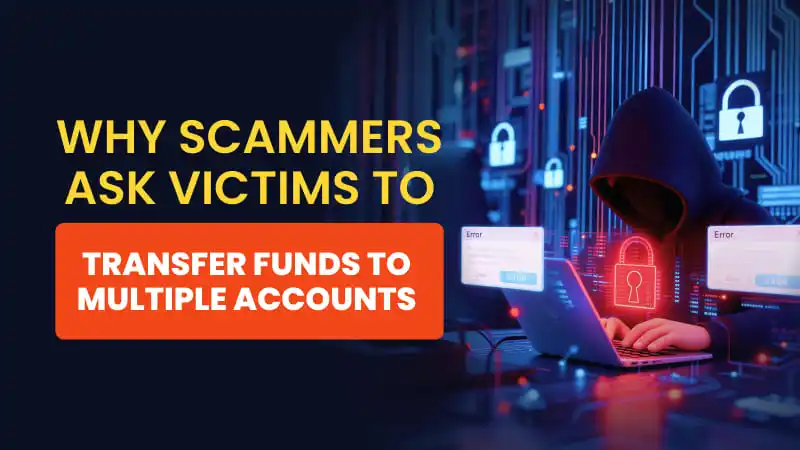
Over a period of several weeks, the victim carried out multiple financial transactions under the guidance of the perpetrators. Law enforcement officials confirmed that eight separate transfers were made between 21 October and 1 December 2025, amounting to a total loss of RM270000. Each payment was directed to different bank accounts, a method commonly used to complicate tracking efforts and delay detection.
Read this article to learn why this is a common tactic used by scammers:
The deception only became apparent when the victim attempted to withdraw the supposed profits generated through the platform. At that stage, the perpetrators introduced additional payment demands, describing them as necessary charges to complete the withdrawal process. This request raised suspicion and ultimately led the doctor to realise that the investment scheme was fraudulent.
A formal report was subsequently lodged with the Johor Bahru Selatan District Police, prompting an investigation into the case. Authorities have since identified that the bank accounts used in the transactions have prior links to fraudulent activities, suggesting the involvement of a coordinated scam syndicate.
Law enforcement agencies are now actively tracing those responsible by analysing financial records and telecommunications data. The investigation is being conducted under Section 420 of the Penal Code, which relates to cheating and dishonesty.
Officials involved in the case have indicated that such scams are becoming more refined, with criminals deploying increasingly convincing tactics to target victims across all segments of society. Professionals, once considered less vulnerable, are now being specifically targeted due to their financial capacity and perceived trust in structured investment opportunities.
The case also underscores the role of digital platforms in enabling fraud operations to scale rapidly. Messaging applications and customised software tools are being used to create a false sense of legitimacy, making it more difficult for victims to distinguish between genuine and fraudulent investment offers.
Authorities have reiterated the importance of verifying any investment opportunity before committing funds. The public has been advised to use official verification tools such as the Semak Mule portal, which allows users to check whether bank accounts or contact numbers have been flagged for suspicious activity.
In addition, individuals who suspect that they may have been targeted by a scam are urged to contact the National Scam Response Centre immediately via its emergency hotline. Early reporting is considered critical in improving the chances of recovering lost funds and preventing further financial damage.
Disclaimer:
The views in this article only represent the author's personal views, and do not constitute investment advice on this platform. This platform does not guarantee the accuracy, completeness and timeliness of the information in the article, and will not be liable for any loss caused by the use of or reliance on the information in the article.
WikiFX Broker
Latest News
Position Sizing Math For Steady Small Account Growth
 WikiFX
InstaForex Review: Broker Profit Deductions, Login Shock, and Regulation Red Flags
WikiFXTenX Prime Review: PAMM Blackout, Login Blocks, and Broker Regulation Questions
WikiFXUniglobe Markets Review 2026: Should You Trade with This Broker?
WikiFXOcta Review 2026: Severe Withdrawal Complaints and Regulation Warnings
WikiFXWorld Cup · Forex Predict & Win Event
WikiFXZenstox Review 2026: Unexplained Profit Cancellation & Account Termination Allegations
WikiFXFXVIEW Review 2026: Regulation, Platform Access, and Complaint Signals
WikiFXIBKR VIP limited Review: No Regulation, Withdrawal Blocks, and a Broker Warning
WikiFXHow a Cambodia Scam Trapped Korean Investors with Fake Trading App & False Profits
WikiFXCurrency Calculator
USD

CNY
Current Rate:0
Enter amount
USD
Redeemable Amount
CNY
Calculate 