


Global Broker Regulation Inquiry App
About WikiFX
English
简体中文
繁體中文
English
Pусский
日本語
ภาษาไทย
Tiếng Việt
Bahasa Indonesia
Español
हिन्दी
Filippiiniläinen
Français
Deutsch
Português
Türkçe
한국어
العربية
اردو
Deriv Review 2026: Regulation, Complaints, and Withdrawal Risks
Abstract:Deriv holds multiple offshore and onshore licenses and provides MT5 access, but a noticeable pattern of user complaints from Indian traders warns of unexpected withdrawal delays, sudden leverage reductions, and account freezes. Despite a WikiFX score of 7.38, traders must exercise high caution due to the broker's lack of local Indian regulatory registration.
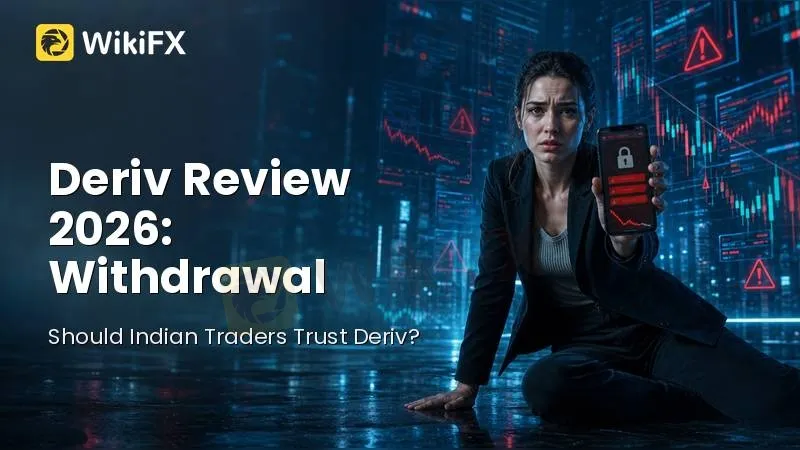
Deriv holds licenses across multiple jurisdictions and currently displays a WikiFX Score of 6.88. However, an increasing number of exposure cases from Indian traders reveal severe withdrawal delays, sudden leverage reductions, and unexpected account freezes. Indian users should evaluate these tangible risk signals carefully before depositing any capital.
In this Deriv review, we look closely at the verified data to separate the broker's advertised conditions from actual user experiences. While the platform has been active since 2019 and supports a wide variety of global payment methods, Indian retail traders need to know whether their funds are truly accessible when it is time to withdraw.
 Contents
Deriv Regulation and Safety
When checking a Deriv broker account, regulation is the most critical factor. According to available records, Deriv is registered and overseen by multiple financial authorities. It holds regulated status with the Malta Financial Services Authority (MFSA) and the UAE Securities and Commodities Authority (SCA). It also operates under offshore oversight from the Vanuatu Financial Services Commission (VFSC), the British Virgin Islands Financial Services Commission (FSC), and the Cayman Islands Monetary Authority (CIMA).
While this global Deriv regulation offers some oversight, it does not guarantee seamless protection for Indian residents. Notably, official regulatory disclosures show that Indonesia‘s BAPPEBTI has previously blocked Deriv’s domains for unlicensed trading operations. Furthermore, a direct user complaint confirms that Deriv is not registered with the Securities and Exchange Board of India (SEBI). If a dispute occurs, Indian traders will have to rely on overseas regulators, which can result in lengthy and complex mediation.
Trading Conditions and Forex Access
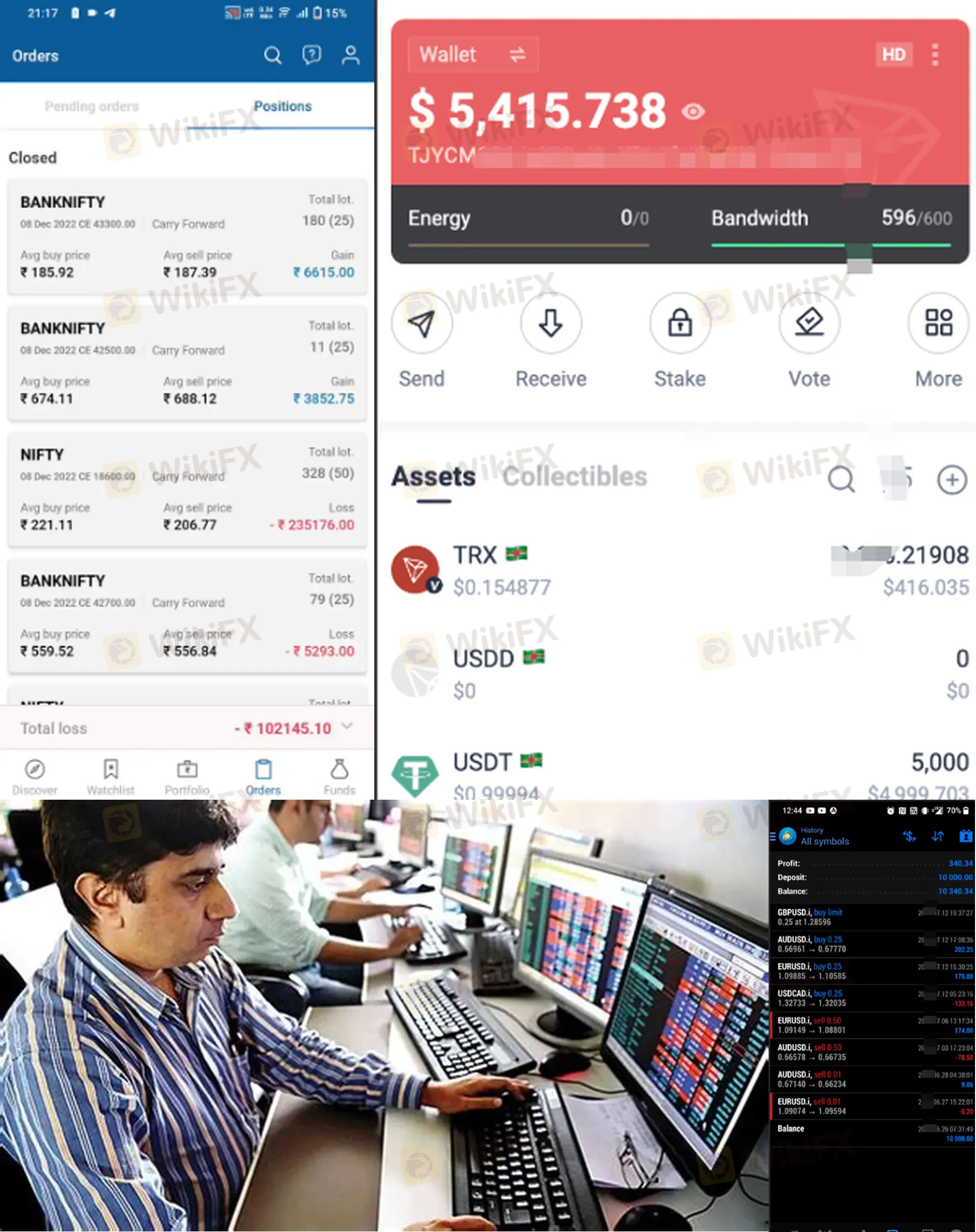
Deriv offers trading on the popular MT5 platform. While the broker supports a vast array of instruments, Indian traders have reported highly concerning trading conditions regarding leverage and slippage.
One severe exposure case from an Indian trader noted a sudden midnight leverage reduction from 1:200 down to 1:50 on a USD/INR Forex position, which triggered an immediate forced liquidation and a massive loss of capital. Another Indian trader reported enduring intentional slippage on a GBP/USD trade during a Non-Farm Payroll (NFP) event, closing out a stop-loss 150 pips past the intended mark. Anyone trading Forex products here must be fully aware that mid-trade margin adjustments and abnormal slippage are active risks.
Platform Access and Deriv Login Safety
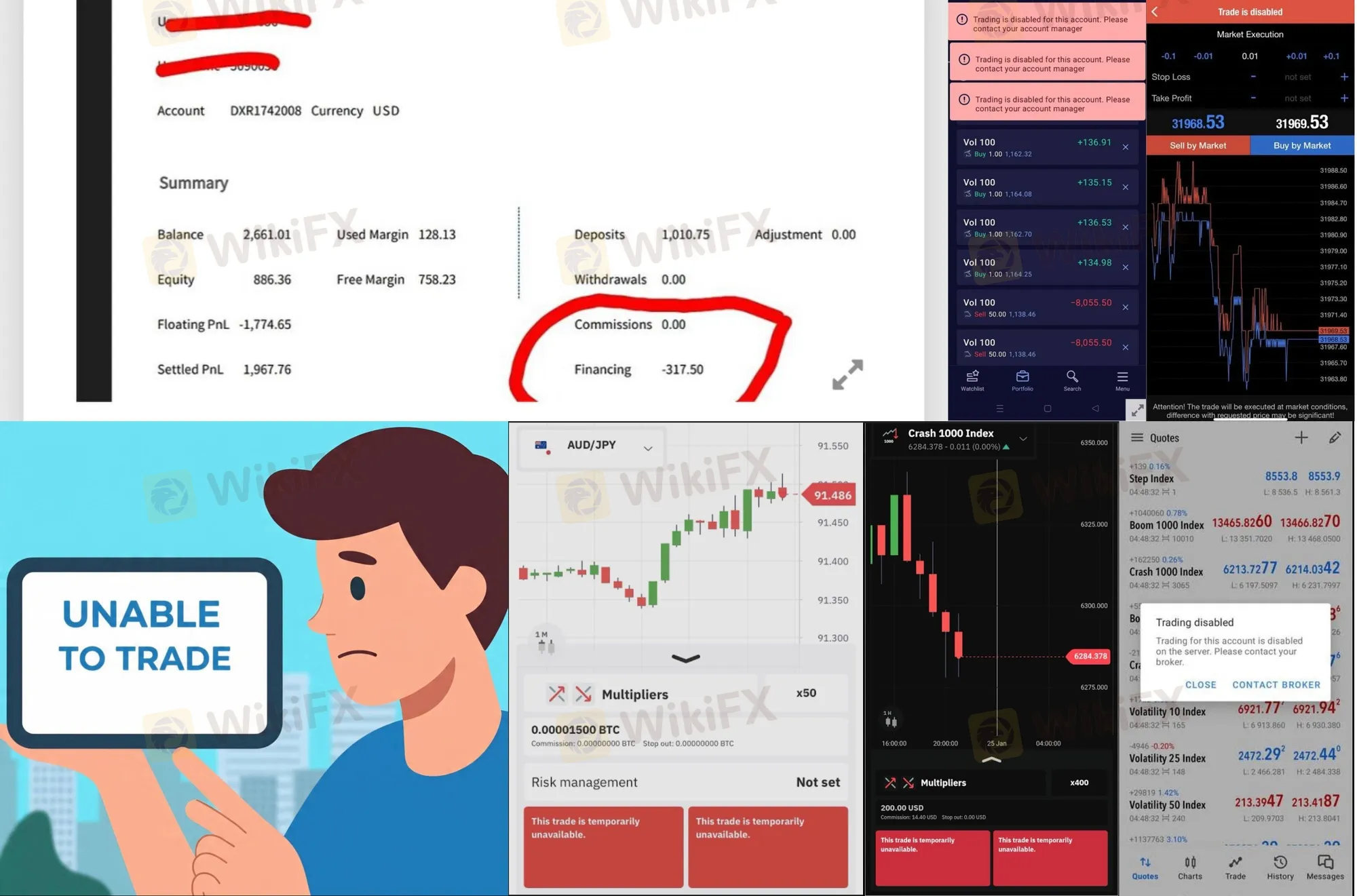
Your ability to manage open trades depends entirely on stable access to your account. According to user exposure cases, multiple traders have faced scenarios where their accounts were abruptly disabled.
Before using the Deriv login page or transferring funds, note that Indian users have reported having their platform interfaces frozen for minutes at a time during critical market movements. In one specific case, a trader noted that they were locked out of closing open positions, yet the system continued to deduct arbitrary “charges” from the disabled account. Ensure you are using the official domain and keep detailed records of your balance in case of platform lockouts.
Trader Complaints and Exposure Cases
The most alarming data point for this broker is its complaint history. WikiFX has recorded 51 recent complaints globally, with a very vocal segment coming from Indian users.
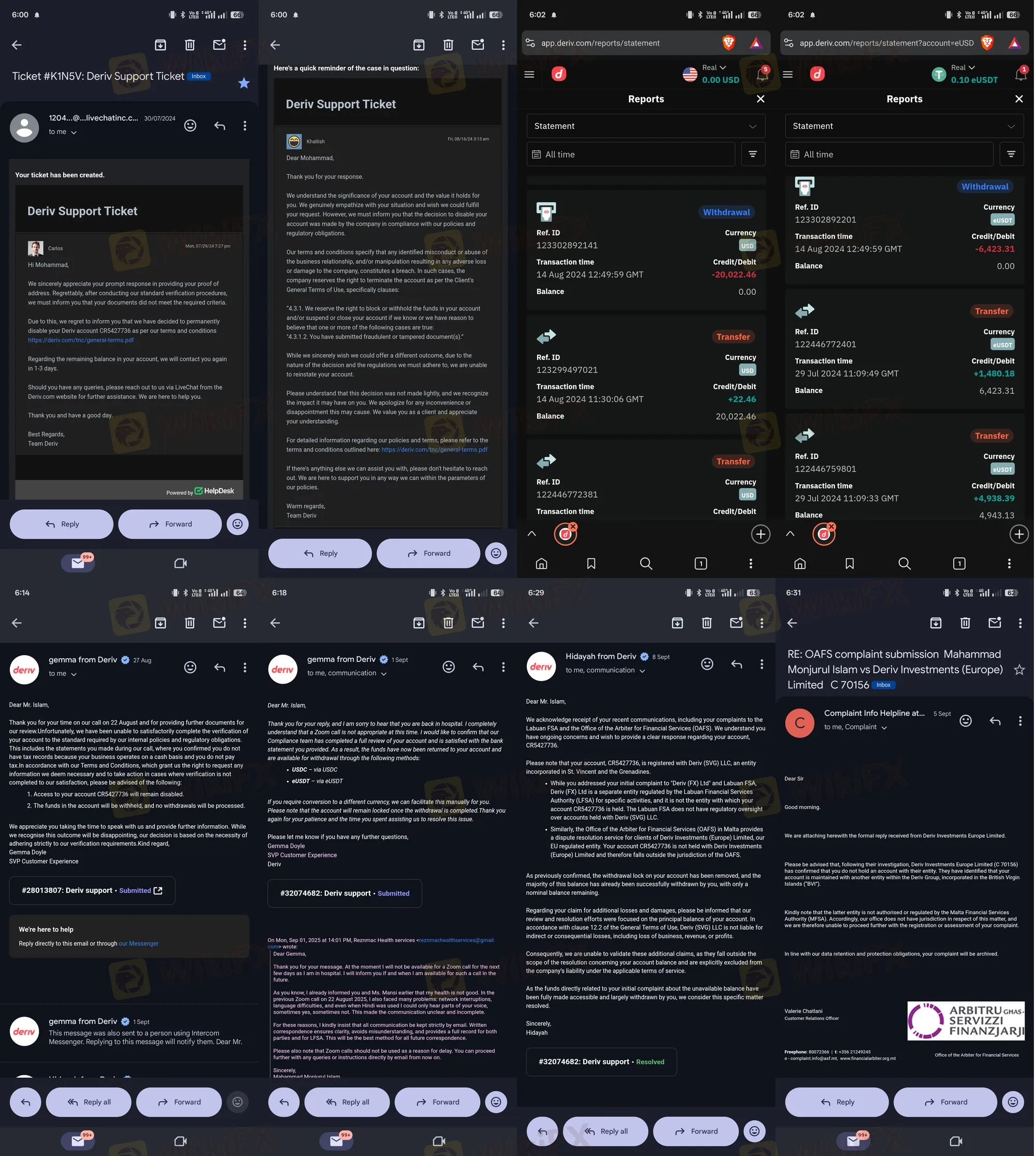
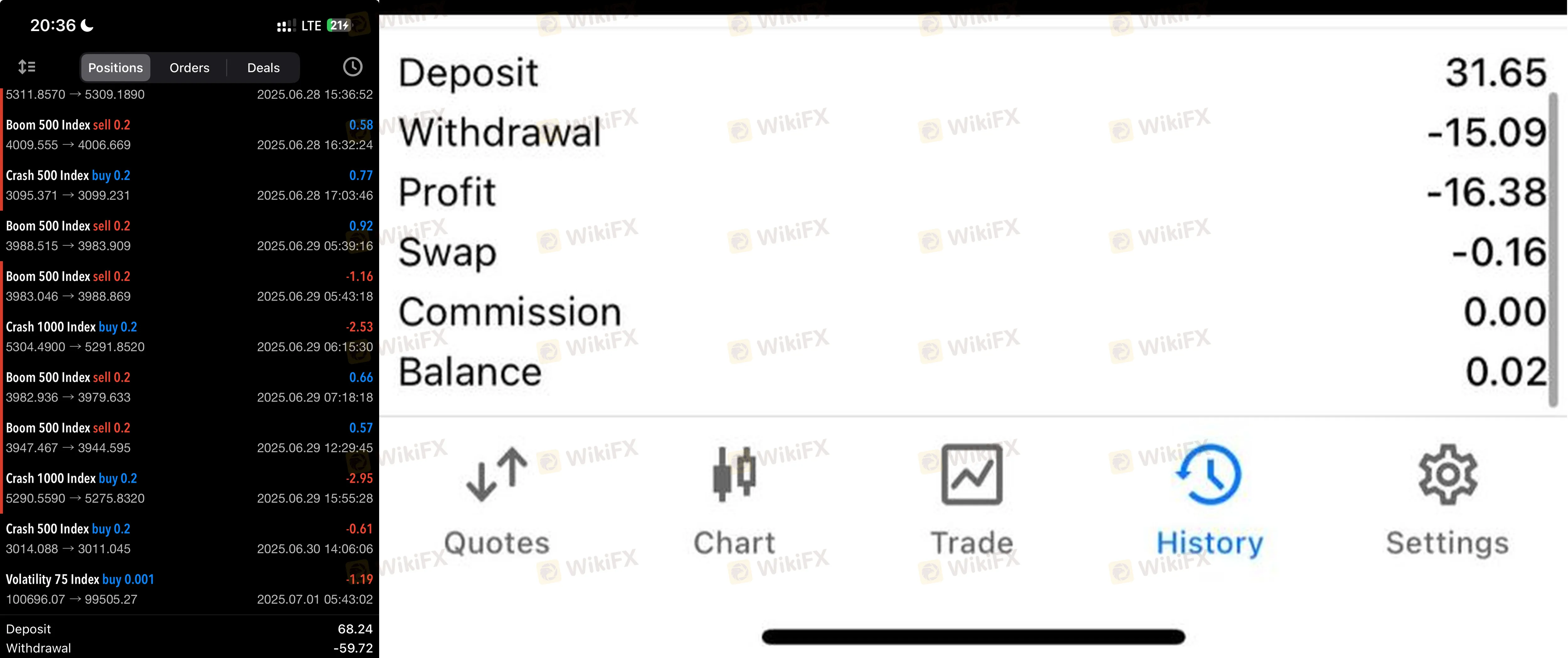
A highly detailed case from an Indian client described a 13-month delay to recover a $26,455 balance. Deriv allegedly disabled the account over unverified fraud allegations, shifted the funds to an offshore wallet without consent, and only released the money after the trader spent months escalating the issue to multiple international regulators—including the MFSA and LFSA. Other complaints cite P2P blockages, deleted accounts, and customer support representatives disappearing on WhatsApp after requesting extensive, unreasonable KYC verification documents.
Deposits, Withdrawals, and Support
Deriv supports a massive list of payment channels, ranging from basic Visa/Mastercard and Bank Transfers to local e-wallets like Skrill, Neteller, AstroPay, UPI, and dozens of cryptocurrency networks (USDT, BTC, ETH, etc.).
However, funding the account is drastically easier than retrieving your money. Several Indian traders reported that despite being notified of “successful” withdrawals, the money was deducted from their Deriv wallets but never credited to their local bank accounts. If you decide to trade here, it is highly recommended to test the system with a small, disposable withdrawal amount before committing serious capital.
Final Verdict: Should Indian Traders Trust Deriv?
Based on the available evidence, Deriv presents a mixed and potentially high-risk profile for Indian traders. On one hand, it holds legitimate licenses in regions like Malta and the UAE. On the other hand, a documented pattern of blocked withdrawals, sudden leverage reductions, and unconsented account freezes directly harms retail traders. Furthermore, it operates outside of SEBIs jurisdiction, meaning Indian clients have zero local legal recourse.
Status changes daily. Before depositing, check the WikiFX App for the latest real-time certificate and broker risk updates.
Disclaimer:
The views in this article only represent the author's personal views, and do not constitute investment advice on this platform. This platform does not guarantee the accuracy, completeness and timeliness of the information in the article, and will not be liable for any loss caused by the use of or reliance on the information in the article.
WikiFX Broker
Latest News
Vonway Forex Review: No Regulation, Withdrawal Complaints, and a Broker Warning
 WikiFX
Rupee Logs Quarterly Gain; Yen Hits 40-Year Low
WikiFXFinalto Review 2026: Regulation, Trading Environment, and Platform Access Risks
WikiFXWHITEFOREX Review 2026: I Am Not the Only Victim of Its Profit Seizure Activity; Users Say This!
WikiFXBelgium’s FSMA Flags 25 Fraudulent Trading Platforms
WikiFXEPFX Review 2026: Should You Trade with This Broker?
WikiFXCash Trust Scheme Cost 1,800 Victims More Than RM100 Million
WikiFXVietnam Becomes New Base for Cross Border Scam Syndicates After Cambodia Crackdown
WikiFXZhida Review 2026: Is This Forex Broker Safe?
WikiFXDollar Holds Firm As Oil Slumps
WikiFXCurrency Calculator
USD

CNY
Current Rate:0
Enter amount
USD
Redeemable Amount
CNY
Calculate 